






Outreach
Life cycle assessment (LCA) is a method used to examine the environmental impacts of products, from the extraction of raw materials right through to waste. Give it a go in a fun way:
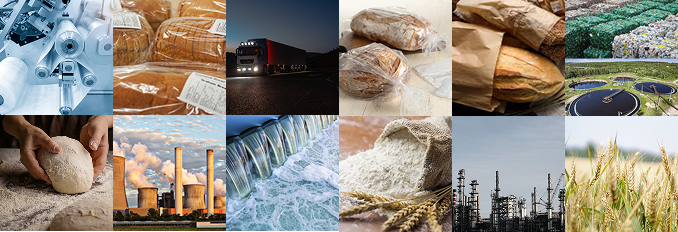
- The life cycle of bread: find out what goes into making a single loaf. You might be surprised by just how much energy, chemicals and fossil fuels are involved.
- Functional unit: is a plastic bag better than a paper one? Calculate the carbon footprint and see how easily changing a single assumption can reverse the result.
Drag the cards with your mouse or finger. The games are available in Czech and English.
SUPRE in media
SUPRE is committed to ensuring that expert knowledge in the fields of sustainability, energy and materials reaches beyond the academic environment and is communicated clearly to the public. Science communication is not a supplement to research, but a natural part of it – without the ability to explain results, their use in practice and in public decision-making cannot be expected.
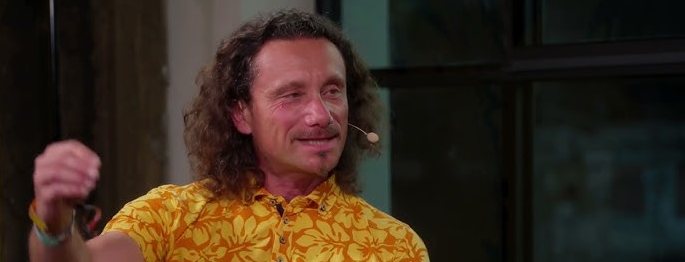
SUPRE's outputs regularly appear in media that reach a broad public. We collaborate with Czech Television, where sustainability topics feature in programmes such as Černé ovce, Nedej se or in news formats such as Studio 6. In 2025, SUPRE will also participate in the series Po nás potopa nebude, which brings contemporary environmental topics to a wider audience.
Beyond television, SUPRE is actively involved in radio broadcasting, for example through Czech Radio (programmes Leonardo or interviews with Radio Wave), where the principles of product life cycle, circular economy or the impacts of specific materials and technologies are explained. These appearances allow us to go into greater depth and explain connections that often do not fit into short media formats.
Online media and science communication platforms also play an important role. SUPRE contributes to expert-popular media such as Ekonews, and participates in discussions on current topics, for example on the purpose of environmental regulations or the role of data in decision-making. In the past, SUPRE's outputs have also appeared in online programmes and reports focused on everyday consumer behaviour, for example in the series "A dost!".
Science communication also takes the form of public lectures and presentations. SUPRE participates in events such as TEDx Zlín, where complex topics such as life cycle assessment or the impacts of consumption are translated into understandable language and broader contexts.
The aim of these activities is not to simplify reality, but to make it accessible. SUPRE seeks to bring a perspective based on data and systematic impact assessment to the public sphere. Science communication thus helps create an environment in which technological and policy decisions can be informed by better understanding of broader implications.