






Topics
At the department, we examine what impacts human activities have at various scales – from raw material extraction, through product manufacturing and organisational operations, to cities, regions and broader planetary systems. We track flows of materials, energy, emissions and the values that underpin them, and we seek to identify where the greatest impacts arise and where there is the greatest potential for improvement.
We are not only interested in what the problem is, but primarily in where the solution lies. Therefore, we integrate analytical methods with practice: we assess the life cycle of products and technologies, map material flows, identify the potential of circular economy, recycling and urban mining, and propose ecodesign principles for products and systems.
Our research focus thus progresses from detail to the whole: raw materials → products → organisations → cities and regions → planet. This perspective enables us to understand connections, prevent the shifting of problems elsewhere and propose solutions that make environmental, material and strategic sense.
Analytical methods
1. Life cycle assessment (LCA)
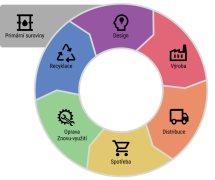
Using LCA, we assess the impacts of products, technologies and services across their entire life cycle – from raw materials through manufacturing and use to end of life. In addition to conventional LCA, we also work with carbon footprint and water footprint, prospective LCA for assessing future scenarios, and advanced approaches for broader environmental implications. Through this, we are able to analyse not only the current state, but also how impacts may change in the future.
2. Material flow analysis (MFA) and Input-Output analysis
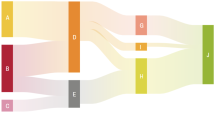
We are interested in how materials, energy and environmental burdens flow through the system. We use MFA and Input-Output analysis methods to map linkages between sectors, processes and regions. Through them, we are able to reveal hidden dependencies, critical points and broader connections that are not immediately apparent at the level of an individual product.
3. Urban mining
We do not view cities merely as places of consumption, but also as repositories of valuable materials. Urban mining focuses on how to recover secondary raw materials from buildings, infrastructure, products or waste and reduce dependence on primary extraction. This approach integrates circular economy, raw material security and the practical search for new sources for the future.
4. Ecodesign
The best impact is the one that never arises in the first place. Therefore, we are also engaged with ecodesign – that is, the design of products and systems so that they are more environmentally friendly from the outset. We take into account material consumption, repairability, durability, recyclability and impacts across the entire life cycle. The aim is to advance innovations so that they are functional not only technically and economically, but also from a sustainability perspective.